Wednesday, May 24, 2017

Final Blog Reflection

Tuesday May 23, 2017 C.E.: 

Wow! It is already the end of the year and with that, the end of WAAS. That is only beginning to sink in. Summer is only 3 days away! However, my time at WAAS was great, largely because of the everyday excitement of science class. This year was probably the most eventful year yet. There is plenty to reflect on this year, the intriguing, exciting, and exotic.

Since the last blog entry, we have undergone some of the most advanced and interesting labs ever. Toward the end of the school year,we did some amazing dissections. We did a number of real dissections and some demo-dissections, which were just as cool. We worked our way up to dissecting a frog, with a starfish. The frog was really exciting, because its dissection is a staple to real biology. The organs inside looked very similar to ours. We could see the liver, heart, intestines, and spleen, among other things.
We also underwent some demonstrations of a kidney dissection and that of a cow eye, sheep brain, and an owl pellet. 
A sheep's brain
However, none of these dissections compare to the Fetal Pig Lab. It took many days. The first two days we inspected the exterior of the pig. We labelled diagrams of pigs based on what we saw. Then we spent a whole class skinning the belly of the pig. We made incisions to remove the skin without damaging the tissue underneath. The next day we cut through the muscle and bone underneath to access the body cavity. There we could observe and label the organs. 
At the end of the year we also underwent an embryology experiment. We incubated and hatched chickens. Over about three weeks we say the development of the eggs. Over time, we were able to "candle" them to monitor their progress. This consists of shining a bright light into the egg. The area where light did not shine through helped us see the progress that was being made. While candling were saw that some of the eggs did not develop correctly. One of the eggs was never fertilized and the other two did not develop correctly. However, all of the remaining nine hatched. In class we were able to see one of them with our own eyes! They stayed with us for a few days until they returned to the farm where they will be raised. 
My two favorite labs were the fetal pig and the frog lab. I liked the frog lab because it was the first "standard" biology dissection I have done. We were able to look at the organs of the frog and compare them to our diagrams one by one. This was really exciting. The pig lab was the best, however. This lab was the climax of our biology curriculum. We worked up to and prepared for the lab the entire time, and when we finally did the lab, it did not disappoint. This year I learned all about the building blocks of life, the classification of organisms, and how to conduct a dissection. At the beginning of biology, I was grossed out by dissections, but by the end, I was quite confident. I felt my biggest success this year was being able to overcome of the challenge of my disgust for preserved corpses, and finding the confidence for slicing them open. My biggest failure this year was probably a bad lab in the first part of the year, but I was able to recover with a series of good labs. 

When I started the year, I had a negative opinion of biology. I thought that chemistry was the only topic worth studying. However, this year has proved me wrong. I really enjoyed the biology we did and I look forward to more in high school. Next year I am going to high school. I am looking forward to taking chemistry, my favorite subject. I want to improve the quality of my labs and do a good job on each one. I want to get an A one the course and use the knowledge I have learned here and apply it in my new school. My favorite memories from WAAS were playing the review games about in our chemistry course two years ago and the burning magnesium demonstration. I feel like in the years since then, I have learned many things. I have become more organized, more focused, and I have learned many scientific topics. Science truly was the most educational subject in my time at WAAS. For future students in Biology, I advise that they review their labs before turning them in and to try new stuff! Biology is fun if you try new things. 

Thank you for reading my blog for two and a half years!

Goodbye!


Friday, April 7, 2017

Unit 7 - Ecology

Thursday April 6, 2017 C.E.:

Hurrah! We have cleared yet another unit of Biology. We are now less than fifty days from the end of school and that is including weekends and breaks. We also have spring break for another week and plenty of time to rest. The unit was probably one of the easier units and I found it quite fun. We have made it to a point where every lab gets better. The labs were probably the most exciting part of this unit, and maybe even the whole year. We have been able to do a wide variety of dissections.
We kicked the unit off with an Earthworm Dissection. We examined its internal organs and poked its gizzard. It was fascinating to complete a real dissection. We sketched the interior and exterior of the organism and labelled all the parts.
The major organs of an Earthworm
However, this lab is not all! We had plenty more exciting labs. We were able to observe the habits of live flatworms and looked at them under a microscope. We looked at their reactions to different stimuli and examined their bodies and structure.
Not only this, but we also took part in a squid dissection. This was by far my most favorite. The squid was very rubbery and elastic, and it was easy to cut it open without severing important organs. It had a lot of organs that were easy to see and it appeared quite intriguing with its arms and tentacles. We examined the heart, reproductive organs, beak and esophagus. The squid also has a vestigial structure of chitin called the pen which is on its back. However the most impressive was the ink sac. We wrote our names using the ink of the ink sac and the pen from the squid's back. What was also really interesting was its eye. After excising the cornea or the front of the eye, the lens was revealed. It was the size, shape, and color of a pearl. It was so strong and brittle that one would think it was a rock or shell. I found it very impressive.
Our final lab concerned Grasshoppers. Grasshoppers are remarkable. WE examined their four wings and elaborate leg structure. However, their mouth was the coolest. It is made up of so many parts! We looked at the interior of its head and its digestive structures. We were even able to identify its gender.
This unit was the most fun out of all of them. We studied population demographics and distribution, ecosystems, and food webs. We looked at the interactions between organisms, Nitrogen/Carbon/Phosphorus cycles, and we looked at age diagrams of populations. 

Monday, March 13, 2017

Unit 6 - Plants

Monday or March 13, 2017 C.E.:

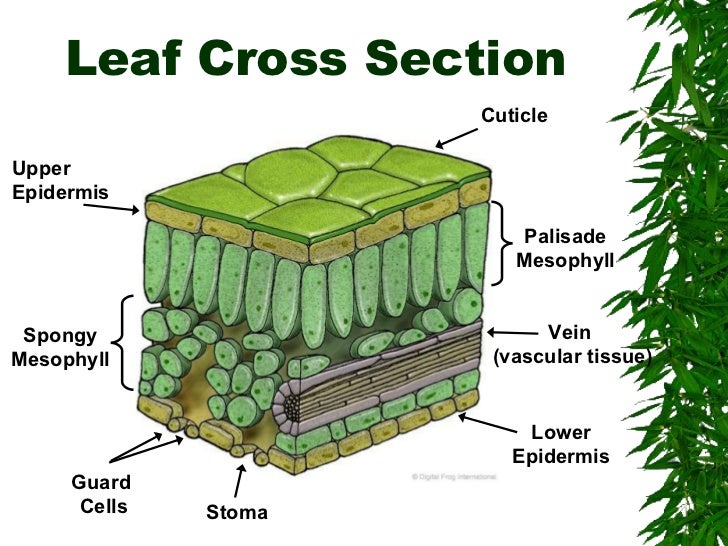
We have now cleared the unit about plants. This unit was not so difficult. The unit consisted of two sections, Plant Form & Function and Plant Reproduction. In the first we talked about the parts of the stems, roots, and leaves. The most interesting was the leaves. The leaves have many layers in their thin, fine expanse. The top layer, the cuticle is a waxy coating designed to repel disease-causing agents and to keep in water. The epidermis helps protect the layers below. The palisade mesophyll comes next and ensures maximum absorption of sunlight. The spongy mesophyll below helps to exchange gases and keeps the leaf light. The vascular tissue inside the spongy mesophyll helps to bring water and minerals up and food down. The guard cells make up the stomata at the bottom of the leaf which help to release water and exchange gases.
Related image
We also studied plant reproduction. It was interesting to see that plants alternate their method of reproduction from producing spores, to producing gametes. We also discussed pollination and reproduction of flowering plants. What was also interesting was the way plants respond to stimuli such as gravity and light (tropism).

We also took part in a multitude of interesting labs. We began the unit with a dissection of a pickle:
Monocot vascular tissue
our first dissection! We examined the different parts of the pickle and practiced the classic I-shaped incision.

One really interesting lab was where we examined the different reproductive parts of flowers. We studied tulips, irises, and day lilies. We made sketches and studied each part of the flower. It was quite a fun lab!

Dicot vascular tissue

We also underwent a lab where we examined the different tissues of plants. We learned of two major classifications of plants, the monocots and the dicots. We learned how to tell them apart and their key differences. Dicots have great bundles of vascular tissue, which we looked at under the microscope. The monocots have small scattered bundles
of vascular tissue.

I really enjoyed this unit and it wasn't as difficult as the previous ones. I look forward to some hardcore dissection in the next few units!

Monday, February 13, 2017

Unit 5 - Diversity of Life

Monday or February 13, 2017 C.E.: 

We have just cleared our latest unit, the diversity of life. I feel like this unit binds what we have learned together and will serve as a base as we move on. We began the unit by studying the classification of organisms everywhere from domains to species. We examined the evolution of organisms and the history of life. Combining what we know from Darwin (natural selection) and Mendel (genetics) we were able to learn about evolution and speciation. Through these concepts I was able to learn about the different ways species are created and how evolution works. We learned about how the fossil record provides scientists with the information they need to conclude and prove evolution.  We also learned that because of DNA, we know that all life-forms come from a common ancestor. In addition to this, we were also taught the concept of artificial selection and adaptations.

The latter half of the unit was spent on viruses and bacteria. I learned that viruses are actually not considered living! I never knew that. Viruses reproduce using the Lytic and Lysogenic cycles. A virus will attach to a host cell and inject its DNA into its host cell. The genetic material will code for virus particles which will begin to be created by the cell. The viruses are assembled and leave the cell, rupturing it through lysis.
The Lytic/Lysogenic Cycle

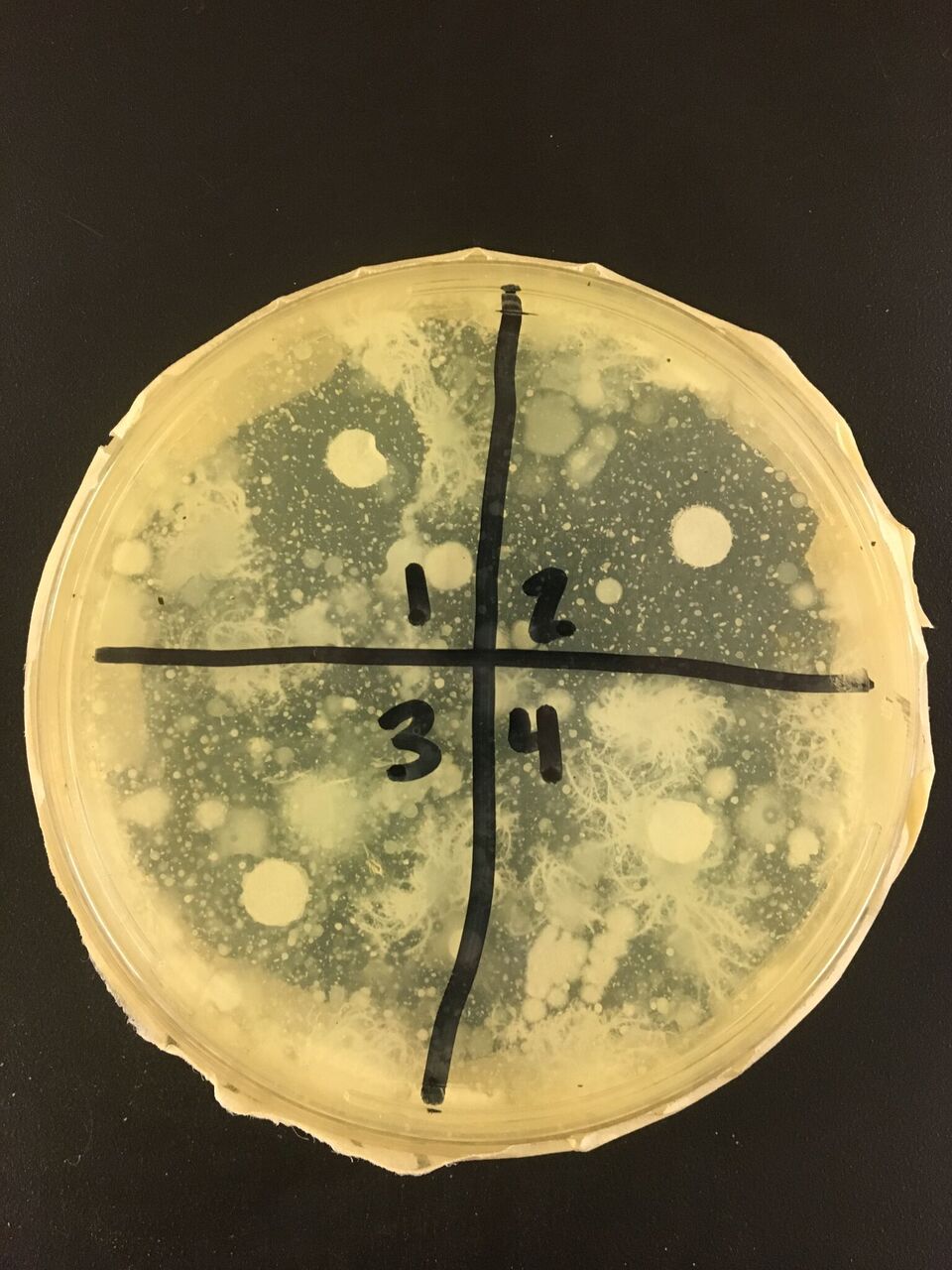
In order to reinforce what we learned in the unit, we took part in a few great labs. In one, we simulated the spread of viruses, in which one person had a test tube with an acid and, through exchanging drops, infected half the class once we revealed who had the acid. We also underwent two amazing labs about microorganisms. In the first we cultivated soil bacteria in petri dishes with four pieces of paper in each dish. Each piece of paper was saturated in a disinfectant and one with water. We then compared the growth of the bacteria. In another lab we incubated bacteria swabbed from a variety of areas such as a computer keyboard, water fountain, the floor, and a phone. The petri dishes containing keyboard bacteria and locker handle bacteria looked the worst.


Biology is becoming more and more fun the farther we are going into it. In the next unit about plants, we will begin our first dissections! In the recent test, I did not score as high as I would have liked, but I will reexamine my study habits and improve this for next time. I can't wait for the units to come. They are just becoming more exciting as they move on.

Tuesday, January 3, 2017

Unit 4 - Heredity

Monday or January 2nd, 2017 C.E.: 

Happy New Year! Now we have officially cleared 2016! However, I have only really cleared 2016 after the midterms which are next week. I am sure I will do well on them, though, as we have a whole week to review.

The unit I am writing about is heredity. It was not as challenging or as long as the other units, but it was still quite interesting.

We talked about what genes are and how they are passed down expressed and passed down. We studied Austrian scientist Gregor Mendel and his study of pea plants. We looked at how traits are passed down from the two parents to the following two generations, called filials. Not only did we cover many interesting topics, we also had the opportunity to take part in a few advanced labs and activities.

In the first lab we extracted DNA from wheat germ. We used water and dish soap to soak and weaken the cell membrane. The alcohol helped the DNA precipitate. At the end of the lab we were able to spool a tiny white tendril of DNA onto a tooth pick.

The second lab was quite advanced. We cross bred 5 different mutations of fruit flies. The first group was the wild type. They are the "normal" types. The second group was the sepia group they had sepia eyes. The third had white eyes, the fourth smaller wings, and the fifth had legs instead of antennae. We studied sex-linked heredity and gene expression in this lab. We separated the male and females and then counted them after each generation. In order to count them, we sedated them with a chemical called FlyNap. This was probably the coolest part. We were not able to complete the lab since all the fruit fliehnbs died during Christmas break, but it was quite an educational lab in which I learned a lot.
We looked at the flies under the microscope in order to see their traits. 
We then sorted them with paintbrushes.

Friday, November 11, 2016

Unit 3 - Cells

Tuesday or November 8th, 2016 C.E.:

I just cleared the most difficult unit to date. The cells unit contained a vast amount of vocabulary and a vast amount of topics. It covered cell theory, the parts of a cell, cell division, and even cellular respiration and photosynthesis.

We learned about cell theory which tells us that all living things are made of one or more cells the cell is the basic unit of structure, physiology, and organization in living things It states that the cell is the basic unit of structure, physiology, and organization in living things.It also states that all cells are organized into tissue which is organized into organs, which is organized into systems, which are all part of the body. It also states that every cell arises from a pre-existing cell. 

We also learned about the two types of cells. They are Prokaryiotic and Eukaryotic cells. Prokaryotes include single celled organisms such as Bacteria and Archaea. Eukaryotic cells are primarily multi cellular organisms. They divide through mitosis and have an area of membrane bound DNA called a nucleus. Prokaryotes divide through binary fission. 


We also talked about reproduction.We learned about the phases of mitosis and the process of binary fission. We also talked about the pros and cons of assexual and and sexual reproduction. 


The unit was finished up by the studying of cellular respiration and the mitochondrion and the study of photosynthesis. There were many interesting steps for each process that we had the opportunity to learn about.  


Not only did we learn about a ton of interesting material, we were also able to take part in a number of incredible labs. The first lab was to help learn how to use the microscope. The second was more in depth where we took a look at cells. We looked at animal and plant cells and drew them and their organelles. In another lab we simulated diffusion through membranes. We used dialysis tubing and put a starch solution on the inside and iodine on the outside in one beaker. In the other beaker we put glucose solution in one bag and normal water in the other. After we left them for a day, the Iodine seeped into the bag causing the starch solution to be purple. The sugar seeped out and the water on the outside tested positive. We talked about why this happens and how smaller molecules can go through membranes easier. It was all very interesting.

Plant cells and their chloroplasts
Dialysis tubing in beakers


Now we are getting into the real stuff of biology and it is way more fun than I would have expected one year ago. I am more motivated and interested in the new material, so much more that I studied quite a lot on my own time. I even created my own set of notes! I really look forward to the next unit about genetics and I hope it will be just as fun as the cells unit. 

Until next time!

Sunday, October 2, 2016

Unit 2 - The Building Blocks of Life

Saturday, October 1, 2016 C.E.:

We went on a really cool field trip to a Hendersonville, NC, which is in the mountains. It was called Mountain Trail Outdoor School. There we learned how to build fires and stay safe in the wilderness. We also learned leadership skills and worked together as a team. I thought the trip was very fun and was definitely worth going to.

Canoeing at the camp
Also, another unit has come and gone and school is starting to be a routine again. This unit was quite difficult because of the vast amount of vocabulary we had to learn. We learned about the atom and chemical bonds for the first part of the unit. This wasn't very challenging for us because we have already taken chemistry. We reviewed ionic and covalent bonds and the structure of atoms. We also talked about ions, pH, and the characteristics of water. The quiz for this section was very easy because we had already learned this before. 

However, the test on the rest of the unit was not so easy. We learned about the four main types of organic molecules. They are carbohydrates, lipids, proteins, and nucleic acids. We had to know everything related top to these things such as their function, their chemical composition, the name of their monomer, and the name of their polymer. 

Carbohydrates serve as structural support in exoskeletons (chitin) and plants (cellulose). They also provide energy for animals. One molecule, called a monomer, of a carbohydrate is called a monosaccharide. Two molecules are called disaccharides. A polymer (many molecules) of a carbohydrate is called a polysaccharide. They are made up of oxygen, hydrogen, and carbon. 

Lipids serve as a energy storage, insulation, and cushioning. They also serve a key role in cell membranes. They are also used in the covering of plant leaves. They are made up of fatty acids and glycerol. Lipids are either fats, oils, or waxes. They are a contain much more energy than carbohydrates.

Proteins are extremely important. They serve in a lot of different areas of cells. They regulate what goes in and out of cells, they perform lots of cell functions. They also help build muscle and help as catalysts. (Enzymes)

Nucleic acids help store and replicate genetic information. They are made up of RNA and DNA. Their monomer is on nucleotide. They are vital for life.

This was quite a difficult unit, but that means I learned a lot. I look forward to biology and the next unit. 


A chart of some of the things we had to know

Tuesday, August 30, 2016

Back to School and Unit 1

Tuesday, August 30, 2016 C.E.: 

School has started again and summer is now over. We have a new school year and also a new blogging style. We will now only blog every Unit and reflect on what we have learned. It is very open-ended so I am not sure what I am supposed to do yet, but I think it will work out. I guess I will talk about my summer because we haven't done much interesting stuff in class yet. 

My summer was probably the best summer ever. My dad switched jobs and had the whole summer off. We decided to go to Japan, China, and South Korea. Japan was my favorite for two reasons. First, the people there were super nice and always trying to help. Second, there is a dog breed that I like that is common in Japan. It is the Shiba Inu breed. They became famous in the "doge" meme. 
Image result for doge original
This is the doge meme picture. I was able to see many dogs of this breed and even the dog in the original picture. This was really great because these dogs super cute and have furry ears. I also went to California with my mom and we also were able to go see four Shiba Inus there as well. We met them at dog parks.

However, school has now started again and that means lots of fun science topics. We did Unit 1 already and it was essentially a review of the Scientific Method. We also did two labs which were also pretty fun. I can't wait to delve deeper into biology with Unit 2 and Unit 3 especially. 

Thursday, May 26, 2016

E & E Final Blog Reflection

Earth and Environmental is over

This is the last week of school and Earth and Environmental is already over. This is the end of all of it. It really was a good year and it had a really good end to it too. I am quite happy since I got 99% on it! This is much better than last year where I was extremely disappointed with my grade. I thought this one was easier too, but I hope I also did good due to my new studying techniques!
        Looking back on the year, two labs were really fun for me. The first was the Cookie Bake-off Lab. In this lab, we had to make our own cookies and vary one variable for each one. This was to help us understand how an experiment works. The best cookie was the one with extra eggs. I remember that our group was supposed to be the control group until one member messed up the ingredients. It still tasted good though. My other favorite lab was the Properties of Seawater Lab that my friend Andrei and I did ourselves. We researched Cyanobacteria and their detrimental effects on marine ecosystems. This was really fun since we had a lot of freedom in how we could do the lab. It still wasn't as good as the cookie eating though!
        This year was also really special because it opened up my mind. Before this year, all I really knew and cared about was chemistry. I would always study chemistry and think that all the other branches of science were stupid. I barely even studied physics! I was dreading E & E, but in reality it was really fun. Now I can learn about more branches of science because I learned that Earth and Environmental is actually interesting. It wasn't as fun as chemistry, but I still liked it much more than I would have thought one year ago.
        Since this year was so much better than I expected, I actually look forward to biology next year. I can't wait to dissect stuff. I also want to learn about about cells and how they communicate.
        Next year I want to improve two things. First is the quality and time taken to do my blog. I want to make it better while also finishing it faster. I spend about one hour per week more than I should on my blog. This hour could be spent doing something really fun and it should. I also want to increase my performance on labs. Labs are where one can learn the most from everything we do in science class. If I perform better in labs, I will be able to learn more and get better grades. Next year I hope to get A+ honor role every quarter and to get an A on each lab. At the beginning of this school year, I received a bad grade on a lab which really hurt me in the long run. My goal is to always do good on labs to prevent this from happening again.
        Lastly, I want to give some advice to future Earth and Environmental students. Firstly, learn as much as you can from the labs. The labs we do are not only fun, but very interesting. Also, keep your binder organized so you can always refer to the information that you have in it. This will  help you study. One useful point to make is that you will only have to study minimally if you pay attention in class. Mrs. Giacomelli will review for the test the day before and if you listen closely, you will see that she gives out all the answers on the test and puts emphasis on the things that will be on there. This is how I get good grades. I barely study at all! The last thing I would like to say is never give up. I once had a C in this class and was able to bring it up to a 97 by the end of the quarter. You can make things up and you can do good in this class.
Knockerball
Looking at Mercury's transit of the sun

Goodbye!!!

Sunday, May 15, 2016

Earth and Environmental Blog Week 25

Monday or May 9, 2016 C.E.:

Today a professor who is the astronomy coach for Science Olympiad came with his telescope for us to witness Mercury crossing the sun. He brought in a very large telescope and put a film over it so we could look at the sun. We took turns looking at Mercury. It was extremely small and was just as big as this period. It was a really cool experience because it doesn't happen very often. The last one happened in 2006! The professor also gave us a presentation about it which was also interesting. After this, Mrs. Giacomelli taught us about moon phases. 

Tuesday or May 10, 2016 C.E.:

No science today!

Wednesday or May 11, 2016 C.E.:

Today we learned more about moon phases. We took notes on them. There are 8 different moon phases. They are new moon, waxing crescent, 1st quarter, waxing gibbous, full moon, waning gibbous, 3rd quarter, waning crescent. We also completed a diagram of the moon and sun at each phase. We also answered questions about the phases of the moon. Once we were done, we got our sheet checked by Mrs. Giacomelli. After this, we either studied for the quiz tomorrow, or did homework. The quiz will be the last of the year and I think I will do good.   

Thursday or May 12, 2016 C.E.:

Today Mrs.Giacomelli wanted to make an experiment. She decided to try to use an app that would scan grades similar to how a Scantron machine would. If it works well, it will be used in the final. This will be awesome because we will be able to know how we did instantly. This quiz was probably the hardest one so far. It may be because we just didn't have that much time or something, but the test was bad. After some grueling decisions, I handed in my test. I now feel like the luckiest person in the world because I got a 100%!!! It was between two for four questions and I guessed them all right. :-)

Friday or May 13, 2016 C.E.:

No blog today...
Summary: This week was a great week. I got a 100% on a quiz that I should have gotten an A- on. Although this is great, I do need to be more prepared for assessments. For this final, I will make sure to study more. 

Monday, May 9, 2016

Earth and Environmental Blog Week 24

Monday or May 2, 2016 C.E.:

Today we started Unit 10. Unit Ten is about space and astronomy. We started notes on distances in space.We talked about AUs and Light-years which I have mentioned already.We went a little more in depth, with parallax and discussed it a little more. We also talked about parsecs. After finishing notes we started our Scaled Solar System lab. We didn't have much time today so we just filled in the distances from each of the planets to the sun and the planet's diameters in a table. Eventually, we will construct a model of the solar system. 

Tuesday or May 3, 2016 C.E.:

Today we did a Kahoot review quiz on our unit. I was in second in the beginning and then I kept my lead all the way until the last question. I read it wrong and then answered it wrong. It was really funny, though. We took just a little bit of notes about the Celestial Sphere and that there are constellations found on it. After that, we continued on our lab. We completed the distance tables in the lab and began to measure out all of the distances that will be in our model. Tomorrow we will complete the model.


Wednesday or May 4, 2016 C.E.:

Today we did a Kahoot again. It was really fun, but I didn't do as good as last time. Right off the bat I got the first question wrong. I thought it was a question related to quantum physics. I was wrong and so I lost. We also did a lot of notes. We mostly talked about orbit. We talked about Kepler's Three Laws of Planetary Motion. We also talked about how orbits are ellipses and that the object in the center is not actually in the center. We also finished our model. Earth was a peppercorn in the model. Jupiter was a racquetball. I also did all of the questions in the lab.

Thursday or May 5, 2016 C.E.:

Today we did a Star Wars themed Kahoot even though it is not May the Fourth anymore. The questions were so trivial that it was mostly guesswork. Too bad I am not good at guessing :). I reviewed my questions on my lab and turned it in. We also did just a bit of notes about rotation and satellites. There is no blog for Friday because Mrs. Giacomelli was not here.
Summary: This week was a fun week. The many Kahoots were quite entertaining. I can still improve the quality of the blog if I blog at the end of each day. This I will do.

Sunday, May 1, 2016

Earth and Environmental Blog Week 23

Monday or April 25, 2016 C.E.:

Today we underwent my favorite review game. In this review game, there are twenty questions. They come up on the projector. The questions are both multiple choice and fill in the blank. They are 5 points each. There are 5 bonus questions for 1 point each. They are not science related, but are usually very fun. At the end there is a wagering questions. You can wager up to 5 points. We wagered 3 points which is good since we got it wrong. The question asked for the axial tilt of Earth. I answered 23 degrees, but it was 23.5 degrees. My group still did good and there will be another game in the near future where we can win.

Tuesday or April 26, 2016 C.E.:

Today we completed a review sheet for the Unit 9 quiz tomorrow. It had a lot of good questions on it. I thought the review sheet was quite useful. We also studied the techbook. Studying the techbook is really important because many of the questions on there are used in the quiz. The assessment I took was well rounded and good. It tested us about Adiabatic and Advective cooling, cloud types, and other things in the unit. It also reviewed a little bit from last unit which is good. I think I am ready for this quiz and it will be good for my grade.

Wednesday or April 27, 2016 C.E.:

Today we took our Unit 9 Quiz. We will not take the test for the unit since we will now move on to the next and last unit. The quiz was good. I think I will get a good grade on it. It seemed shorter than last time we took one, but maybe that is just because the font was smaller than last time. I was finished relatively fast at the end of the quiz and was able to work on homework a little bit. This was nice.

Thursday or April 28, 2016 C.E.:

Today, we reviewed the quiz. Unfortunately, I did not do as well as I had hoped. I made a careless error and thus missed a multiple choice problem.We also started some vocab cards for the next unit. I completed the words astronomical unit, celestial sphere, declination, parallax, and right ascension. One astronomical unit is the distance from the Earth to the Sun. The celestial sphere is cool. It is a sort of round sphere around Earth with unknown radius that contains the stars. It doesn't actually exist, but when we stargaze, it seems like the whole thing we are looking at is a big dome. This is the celestial sphere.

Image result for parallax
Parallax

Friday or April 29, 2016 C.E.:

Teacher workday today, so no school for us! Yay! :)

Summary: This week was a good week. We finished up Unit 9 and now we are in the final Unit. I can still improve my efficiency while writing my blog and I will continue to do so.

Saturday, April 23, 2016

Earth and Environmental Blog Week 22

Monday or April 18, 2016 C.E.:

Today we started notes on Unit 9 Section 1. I think we will only do one section in the next units because we don’t have enough time. The section is about the weather. We talked about the different types of clouds and precipitation. Clouds cannot form without dust or other small particles. Water condenses onto them and that is how clouds form. We also talked about the three types of clouds, Cirrus, Stratus, and Cumulus. We also talked about fog and how it forms. I am quite excited about this unit. Our teacher, Mrs. Giacomelli, told us that we would be able to go cloud gazing. Too bad we don’t have clouds right now.

Tuesday or April 19, 2016 C.E.:

Today we did a lot of notes. We looked at all the types of clouds again and went more in depth into the unit. We talked about Latent heat. Latent heat is the heat that is taken in or released when water undergoes a phase change. If water evaporates, it takes heat from the environment. This is why we are cold when we are wet. We also talked about saturation. Saturation is the point when air can no longer hold any more water vapor. The warmer the air, the more water vapor it holds. If air is cooled, it condensates quickly because it reaches its saturation point. This happens when water condensates on a glass.

Wednesday or April 20, 2016 C.E.:

Today we took some more notes. We talked about how the dew point is the temperature that air must cool to in order to reach saturation. Fog often forms at dew point, but quickly disappears when the ground below it is heated by the sun. We also talked about absolute humidity and relative humidity and adiabatic and advective cooling.  Adiabatic cooling happens when rising air cools as it expands. Advective cooling occurs when air moves alongside a cold surface. Absolute humidity is a measurement of the mass of water vapor in the air. Relative humidity is the percent of water vapor in the air, with 100% being the saturation point. We also started the Air Pressure Lab. It contains many small stations.

Thursday or April 21, 2016 C.E.:

Today we took some more notes.We studied temperature inversion. Temperature inversion happens sometimes when a warm front comes in. Normally, temperature decreases with altitude. In special circumstances, a warm air mass moves up and stops convection in the area. This sometimes traps smog in cities. We also talked about how severe weather happens when cold, dry air masses mix with warm, wet air masses. Also, rapid convection can cause cumulonimbus clouds. These can cause anything from thunder and lightning to hail and tornadoes. Today we also worked on our stations. I am almost finished.
Temperature Inversion
Friday or April 22, 2016 C.E.:

Today we had a substitute because Mrs. Giacomelli had already left for the Science Olympiad competition in Raleigh. I wish the contestants luck! I finished the stations. After this, we worked on blogs and reviewed the unit.
Summary: This week was a good week. I finished my blog faster and worked efficiently. Next week, I aim to finish my blog a day earlier, as this will help me complete other things. 

Monday, April 18, 2016

Earth and Environmental Blog Week 21

Monday or April 11, 2016 C.E.:
Today we did a lot of notes for the next section of the atmosphere unit. We talked about how air has weight and that it is similar to the ocean. We also talked about air pressure, and that it is not constant. We then went into detail of each layer. We also talked about the differences in temperature of the layers. Between the Troposphere and the Stratosphere is the tropopause. The air in the two layers doesn't mix because of their temperature differences. Sometimes ash or another airborne particle makes it into the stratosphere. It will usually stay up there for years. I found this quite interesting. Now the studying for the test shall begin.
The atmospheric Layers


Tuesday or April 12, 2016 C.E.:

 Today we completed the study guide for Friday's test. It was more difficult than the notes. The study guide also had things about the next unit on it. The next unit has things about clouds, but we were still able to answer them because we have learned about clouds before. Essentially all of the other questions in the study guide were similar to those we have done before, except that they had a little more application, and were phrased differently. After this, I had a little extra free time, which was also nice.

Wednesday or April 13, 2016 C.E.:

Today we took our Vaseline air quality samples back in. Ours had an extremely small amount of airborne particles. Even those inside had more. Some of the inside samples had nine or so one average. We had two. The ones outside had around forty. I think this is because the trashcan has very little air circulation. It was really cool when we looked at the particles inside the microscope. At the end of class we put all of the things people had into a table in order to make a graph next class.

Thursday or April 14, 2016 C.E.:

Today the rest of the class looked at their samples. One group had seventy particles! Theirs was outside, obviously. The sample was also right in the path of the wind. The sand and dust probably took flight with the wind and fell onto the vaseline, which is why they had so many particles. After this, we typed in all of the rest of the data into our tables. We then we created our air quality graph. It was quite striking to see that the outdoor ones had so much more particles. We also reviewed for our test tomorrow. I think I will do good, but we will see.

Friday or April 15, 2016 C.E.: 

Today we took our Unit 8 Quiz on the Atmosphere. I thought it was quite easy and that I will do good on it. We had less short answer questions than normal, so I was done faster. We had to construct a graph on air pressure instead. I think I will get a 100%.
Summary: So it turns out I did get a 100%. I am thrilled! This really brought my grade up a lot. This week was a great week. I just need to make sure I finish my blog on time next time.

Monday, April 11, 2016

Earth and Environmental Blog Week 20

Monday or April 4, 2016 C.E.: 

Today we reviewed our information for Unit 8 quiz. It is about the atmosphere. The first section begins talking about the atmosphere. The second section, which we will learn about after this quiz, just goes into more detail on the structure of the atmosphere. We reviewed the composition of the atmosphere. It is 78% Nitrogen, 21% Oxygen, 0.9% Argon, and 0.1% trace gasses (Neon, Hydrogen, Carbon Dioxide). We also reviewed the origin of the atmospheres. There have been three atmospheres. The first appeared after ancient volcanoes released gasses in a process called outgassing. This was blown away by a large meteorite. Then a new one formed similarly. This was changed by Cyanobacteria which added the present levels of Oxygen to our atmosphere.

Tuesday or April 5, 2016 C.E.:

Today we started a new lab. It is the Air Quality Lab. We will be measuring the air quality of different areas in the school. We taped a clear plastic sheet to an index card. We put a dab of petroleum jelly on each plastic sheet and hung them in different places. I hung mine up inside the dumpster because my original idea was already taken. When we take them back in, we will look at the amount of particles that are stuck to the jelly. We will then compare the different places together.

Wednesday or April 6, 2016 C.E.: 

Today we took our Unit 8 Section 1 quiz. I think I did well on it. I don't think I got a 100, but I still think I did well. The test had some questions that are harder than normal. The problem is that one multiple choice question missed is four points. This is a lot so there is no room for error. This test was about the application. We could not just memorize the definitions and make it through this test, so I think it is a good test.
Layers of the Atmosphere

Thursday or April 7, 2016 C.E.:

 Today we didn't have school because of IOWA Assessments.

Friday or April 8, 2016 C.E.:

I scored a 96% on my test. This is not good or bad. I missed one multiple choice question, but that isn't really that bad. We reinforced our samples with duct tape so they wouldn't fall down. It didn't seem like there were many particles in the trash can. Maybe this is because there are no airborne particles or moving air, just heavy bags of trash.We also started the second section. It is about the structure of the atmosphere. We also talked about how the atmosphere is like an ocean of air, and that we live on the bottom of it.
Summary: This week was a good week. I did ok on my quiz, but I still could have done better. I made a careless error and thus I got a 96%. I have to stop making these errors next time.

Saturday, March 12, 2016

Earth and Environmental Blog Week 19

Monday or March 7, 2016 C.E.:

Today we continued writing our research paper. I am almost done with my Controlling N and P factors paragraphs. I am writing about how to decrease Phosphorus in aquatic environments. We also started to take notes on the next and last section of this unit. This unit has two large sections instead of five or six small sections. We talked about the ocean floor. The ocean floor is divided into two regions, shallow and deep. In the shallow ocean, there are continental slopes, shelves, and rises. In the deep ocean, there are mid-ocean ridges, trenches, and rift valleys.

Tuesday or March 8, 2016 C.E.:

Today we continued our notes. We talked about the ocean floor. We talked about the continental shelf. We also talked about how the continental slope marks the boundary between continental and oceanic crust. In the deep ocean floor, there are really interesting land forms. The first is the mid-ocean ridge. It is usually at the center of the ocean and is a massive 80k kilometer mountain range. There are also extremely deep trenches and underwater volcanoes called seamounts.The most boring type of seafloor is the abyssal plain. It is just your average, flat, and sandy seafloor except that it is 4,000 meters under the sea. I also finished the N and P factors paragraph today.

Wednesday or March 9, 2016 C.E.:

Today we talked about the two main depth zones in our oceans. They are the Photic and the Aphotic zones.The Photic zone receives a lot of sunlight and the Aphotic receives less than 1 percent of the sunlight at the surface. Photosynthesis only occurs in the Photic zone. This zone is plentiful in food. The zone near the shore is the Neritic zone. This is also plentiful in food and biodiversity. The Benthic zone is the ocean floor and the Pelagic zone is the water above the floor. We also discussed the characteristics of each zone. I also started my last paragraph for the research project. Soon we will wrap up our writing.
Thursday or March 10, 2016 C.E.:

Today we finished Unit Seven's notes and I finished the writing for the research project. In notes today, we expanded upon the notes of yesterday, but we did learn that the zone between the Photic and the Aphotic zone was the transition zone. After notes, I finished my last paragraph for the project. I am still not close to done, however, because I still need to format it so it looks formal. I also need to edit it which will not be easy since it is over 1,000 words. The hardest part, however, will be the citations. We have around twenty sites and I am going to have to cite them all.

Friday or March 11, 2016 C.E.: 

Today many people were not at school because the Science Olympiad state competition is tomorrow. Thus, the class period was really fun and we had a lot of room. We had almost no instruction so I could spend most of class editing our paper. Andrei wrote much more than I did, but I found and cited our images. The editing process will take forever because Andrei tends to write in fragments and because Google Documents, the program which we wrote in doesn't catch mistakes very well. I might have to get a Grammarly free trial just in case I forget things.
Summary: This week was good. We finished notes for Unit 7 and I finished the writing for my project. I finished my blog with greater efficiency than last week's blog, but I can still improve.